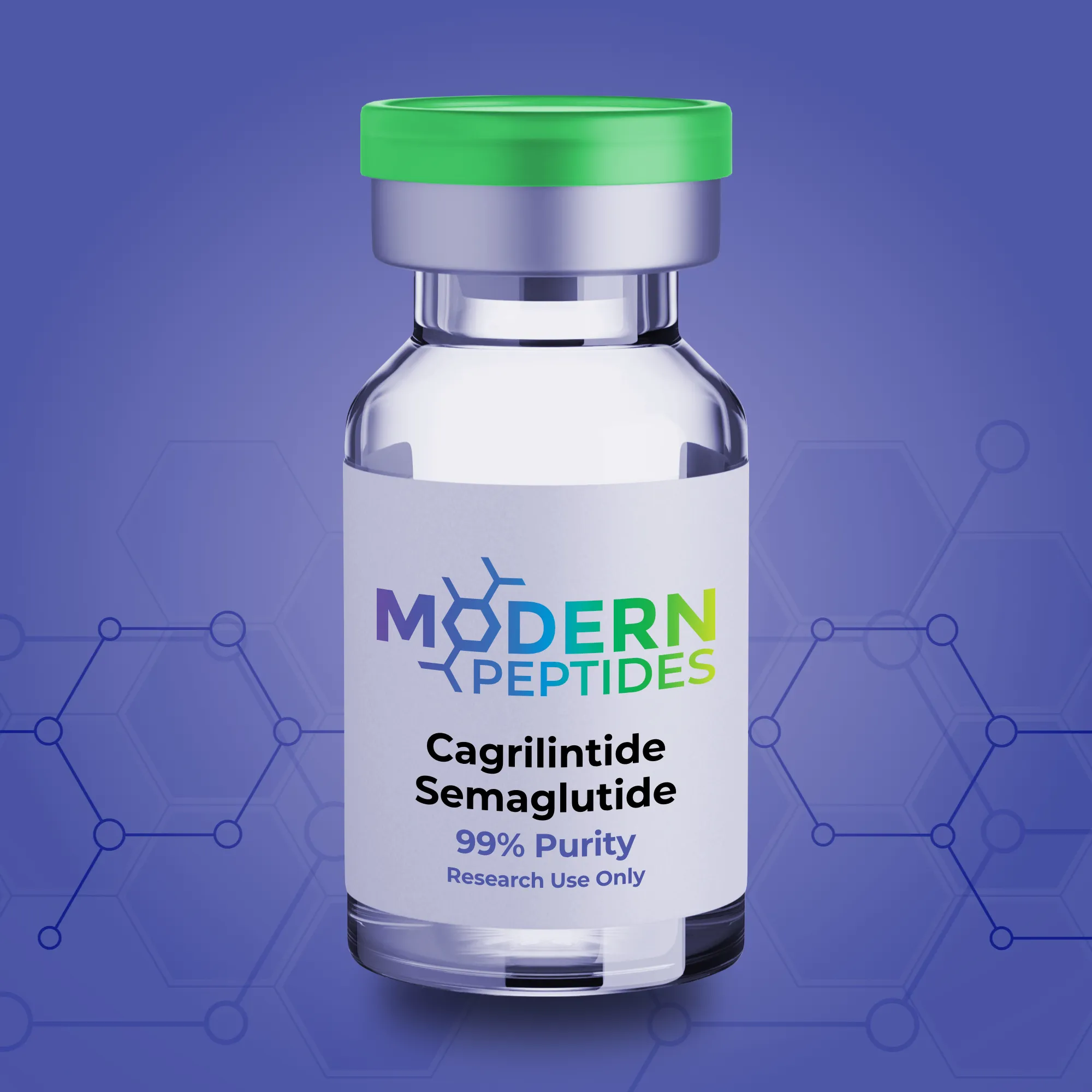
Cagrilintide Semaglutide: Understanding the Combination
Cagrilintide Semaglutide refers to research involving two different compounds that affect pathways associated with appetite, food intake, body weight and metabolic health.
Cagrilintide is an amylin analogue, while semaglutide is a GLP-1 receptor agonist. Researchers are studying whether targeting these different pathways together may produce complementary effects.
What Is Cagrilintide Semaglutide?
Cagrilintide Semaglutide combines two distinct mechanisms of action.
Cagrilintide is a long-acting amylin analogue being investigated for its effects on appetite and feelings of fullness.
Semaglutide activates the GLP-1 receptor and is used in certain authorised prescription medicines for specific medical conditions.
Because the compounds work through different biological pathways, their combination is an area of ongoing clinical research.
How Does Cagrilintide Semaglutide Work?
The two components affect different signalling systems.
Cagrilintide acts on the amylin pathway, which is involved in appetite and food-intake regulation. Semaglutide activates GLP-1 receptors, which are involved in glucose regulation, insulin secretion and appetite.
Cagrilintide Semaglutide research therefore focuses on how these mechanisms may interact when studied together.
Cagrilintide Semaglutide and Weight Research
Weight management is an important area of research involving this combination.
Clinical studies have investigated changes in body weight, appetite and other metabolic measurements among participants receiving different treatment approaches.
Results from clinical trials should always be considered in the context of the study population, treatment duration, dosage and methodology. Individual responses can vary.
Appetite and Food Intake
Both pathways are associated with appetite regulation.
Amylin signalling can contribute to feelings of fullness, while GLP-1 signalling can influence appetite and food intake. Researchers are investigating whether combining these mechanisms may provide complementary effects.
This research does not mean that a particular outcome is guaranteed for an individual.
Glucose Regulation Research
The semaglutide component affects the GLP-1 pathway, which plays an important role in glucose regulation.
Research involving Cagrilintide Semaglutide may examine measurements such as:
- Blood glucose
- HbA1c
- Insulin response
- Body weight
- Other metabolic markers
The significance of these measurements depends on the specific clinical study and participants involved.
What Does Current Research Examine?
Studies involving this combination may examine:
- Changes in body weight
- Appetite and food intake
- Glucose-related measurements
- Metabolic health
- Safety and tolerability
- Adverse effects
- Longer-term outcomes
As research develops, additional clinical evidence may provide a clearer understanding of the potential applications and limitations of this approach.
Possible Side Effects
Treatments affecting appetite and gastrointestinal signalling can cause adverse effects.
Potential gastrointestinal symptoms may include:
- Nausea
- Vomiting
- Diarrhoea
- Constipation
- Abdominal discomfort
The safety profile depends on the specific treatment, dose and individual circumstances.
Important Safety Information
Semaglutide is an active pharmaceutical ingredient used in authorised prescription medicines. The regulatory status of cagrilintide-containing combinations depends on the specific product and jurisdiction.
Cagrilintide Semaglutide should not be presented as an approved treatment unless the specific product has received appropriate regulatory authorisation.
Information on an online page should not replace advice from a qualified healthcare professional.
Research vs Online Claims
Information about peptide combinations can vary considerably online.
When evaluating information about Cagrilintide Semaglutide, consider:
- Peer-reviewed clinical research
- Clinical-trial data
- Regulatory information
- Official product documentation
- The date of the research
- The population studied
Be cautious with claims promising guaranteed weight loss or specific medical outcomes.
Frequently Asked Questions
What is Cagrilintide Semaglutide?
It refers to research involving cagrilintide, an amylin analogue, and semaglutide, a GLP-1 receptor agonist.
Why are they studied together?
Researchers are investigating whether their different biological mechanisms may have complementary effects on appetite, food intake, body weight and metabolic health.
How are the two compounds different?
Cagrilintide acts through the amylin pathway, while semaglutide activates the GLP-1 receptor.
What does the research examine?
Studies can examine body weight, appetite, food intake, glucose-related measurements, safety and tolerability.
Are there possible side effects?
Yes. Gastrointestinal effects such as nausea, vomiting, diarrhoea and constipation can occur with therapies affecting these pathways.
Important Disclaimer
This page is provided for general educational and research information only. Information about pharmaceutical compounds and investigational combinations can change as clinical research and regulatory reviews progress. This content is not medical advice, a diagnosis or a recommendation for treatment. Consult a qualified healthcare professional for advice about medicines and medical treatment.